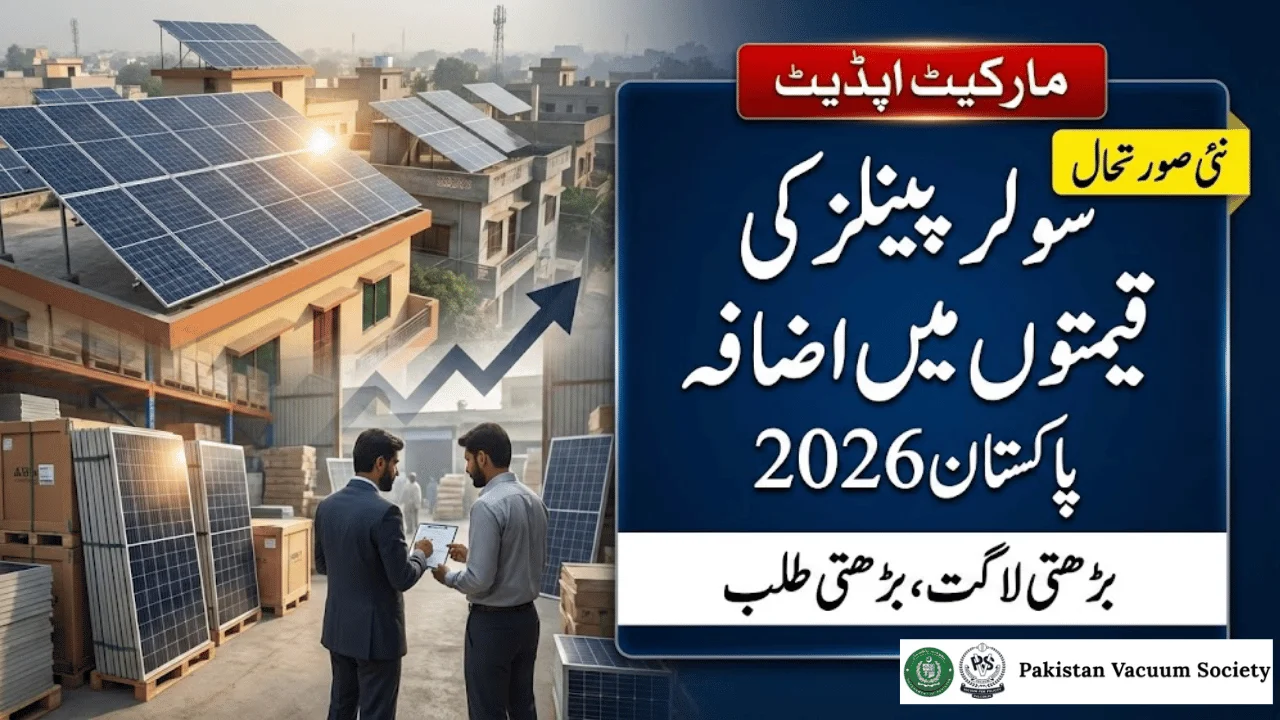
The search trend for solar panel prices in Pakistan has risen sharply in 2026 as buyers across the country notice a significant increase in solar panel costs. Households, businesses, and farmers planning to switch to solar energy are now facing higher prices compared to last year.
This article on PVS.com.pk is 100% original & created to help users clearly understand what changed, why prices increased, and what to expect next.
Solar Panel Prices Increase in 2026 – What’s Happening?
Since the beginning of 2026, solar panel prices have increased across Pakistan, especially for imported Chinese panels, which dominate the local market. Retailers in major cities report noticeable price jumps in high-demand wattage categories.
On average, buyers are paying Rs. 4,000 to Rs. 6,000 more per panel than they did just a few months ago.
Latest Solar Panel Prices in Pakistan (2026)
Below is an updated and easy-to-understand price overview based on current market trends:
| Solar Panel Capacity | Approx Price (PKR) | Previous Avg Price |
|---|---|---|
| 585 Watt Panel | Rs. 20,000 – 21,000 | Rs. 16,000 – 17,000 |
| 645 Watt Panel | Rs. 24,000 – 25,000 | Rs. 19,500 – 20,500 |
| 720 Watt Panel | Rs. 30,000 – 35,000 | Rs. 22,000 – 25,000 |
📌 Prices may vary by city, brand, and stock availability.
Why Solar Panel Prices Are Rising in Pakistan
Several global and local factors are behind the sharp increase in solar panel prices:
1. Higher Raw Material Costs
International prices of silver and copper, both essential for solar panel manufacturing, have risen. These metals are heavily used in solar cells and wiring, increasing production costs worldwide.

2. Increased Import Costs
Most solar panels in Pakistan are imported. Import-related taxes, duties, and currency pressure have raised landed costs for suppliers, which are passed on to consumers.
3. Strong Public Demand
With rising electricity bills and load-shedding concerns, demand for solar energy has grown rapidly. High demand during peak buying seasons naturally pushes prices upward.
4. Price Hikes in China
Manufacturers in China have adjusted prices due to increased global demand and higher input costs, directly affecting Pakistani markets.
Per-Watt Solar Panel Cost Trend
Over the past few months, the per-watt price of solar panels in Pakistan has increased noticeably:
-
Earlier average: Rs. 22 per watt
-
Current range: Rs. 30 – 33 per watt
-
Possible future trend: Up to Rs. 40 per watt if costs continue rising

This shift has a direct impact on total system installation costs.
Solar Battery Prices Also Going Up
The price hike is not limited to panels alone. Solar batteries used for backup storage have also become more expensive.
-
Battery prices increased by around 10% in recent weeks
-
Higher demand and import costs are the main reasons
-
This adds extra pressure on households planning full solar systems
Is This the Right Time to Buy Solar Panels?
For many buyers, the decision is difficult. Here’s a practical view:
Reasons to Buy Now
-
Electricity tariffs continue to rise

-
Solar remains a long-term cost-saving solution
-
Delaying may mean even higher prices later
Reasons to Wait
-
If global prices stabilize, local rates may ease
-
Government policies or incentives could change
💡 Tip: If you plan to install solar within the next year, delaying too long may not save money.
Market Outlook for Solar Prices in 2026
Experts believe:
-
Prices may remain high in the short term

-
Any reduction depends on global metal prices and import policies
-
Pakistan still has good solar stock availability, preventing shortages
Despite higher prices, solar energy remains one of the most reliable alternatives to grid electricity.
Conclusion
The solar panel price increase in Pakistan in 2026 is driven by global material costs, rising demand, and import-related factors. While the upfront cost is higher, solar power continues to offer long-term savings and energy independence.
For latest updates on solar prices, government energy schemes, market trends, and public-interest news, keep visiting PVS.com.pk — your trusted independent source for clear, accurate, and human-focused information in Pakistan.