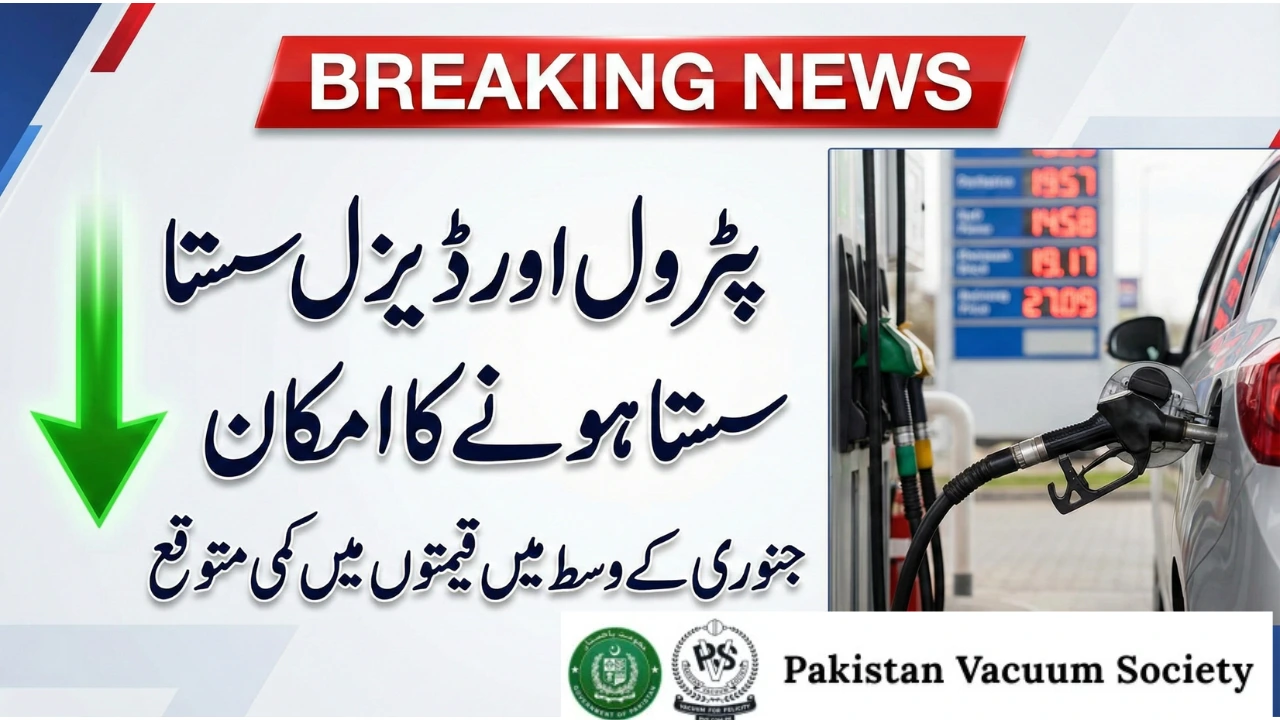
Pakistanis may see some relief at the fuel pump as petroleum prices are expected to decline in the upcoming price review for the second half of January 2026. Market assessments indicate that petrol, diesel, and other petroleum products could become cheaper due to recent movements in the global oil market.
According to industry and government-linked sources, the reduction is being calculated based on international crude trends and existing tax structures. If approved, the revised prices will apply for the fortnight ending January 31, 2026.
Expected Reduction in Fuel Prices
Preliminary estimates suggest a noticeable cut across major petroleum products. Petrol prices are projected to drop by around Rs4 to Rs4.50 per litre, while high-speed diesel may see a decrease of approximately Rs2.50 to Rs3 per litre. Kerosene oil and light diesel oil are also expected to become slightly cheaper, offering marginal relief to households and small businesses that rely on these fuels.

These reductions may appear modest, but they matter in a high-cost environment where fuel prices directly affect transport fares, food prices, and daily expenses.
Why Fuel Prices Matter So Much
Petrol is widely used by private vehicles, motorcycles, rickshaws, and small cars, making it especially important for middle- and lower-income households. Even a small decrease can ease monthly commuting costs for millions of people.

Diesel plays an even larger role in the economy. It powers buses, trucks, agricultural machinery, trains, and generators. Any change in diesel prices has a ripple effect on inflation, particularly on food items and public transport fares.
Despite earlier reductions in fuel prices over recent months, transport fares in many areas have not been fully adjusted downward. As a result, further cuts may renew public pressure on transport operators to revise fares.

Taxes Still a Major Factor
While global oil prices influence local rates, a significant portion of fuel prices in Pakistan comes from taxes and levies. The government currently collects a substantial amount per litre on both petrol and diesel, which limits how much relief can be passed on to consumers even when international prices fall.
What to Expect Next
The final decision on fuel prices will be announced by the government after completing formal calculations. Prices may vary slightly from early estimates depending on exchange rates, freight costs, and fiscal adjustments.

If confirmed, the reduction will provide short-term relief to consumers and businesses, though broader inflationary pressures will depend on whether the benefits are reflected in transport and commodity prices.